For accounting firms and companies that live on other people's data
Your employees are already pasting company data into ChatGPT. You just don't know it yet.
One pasted document = your data in a company you never audited. GDPR fine: up to €20,000,000. And there's a third option: AI on your documents that never leaves your building. No changes to your daily work.
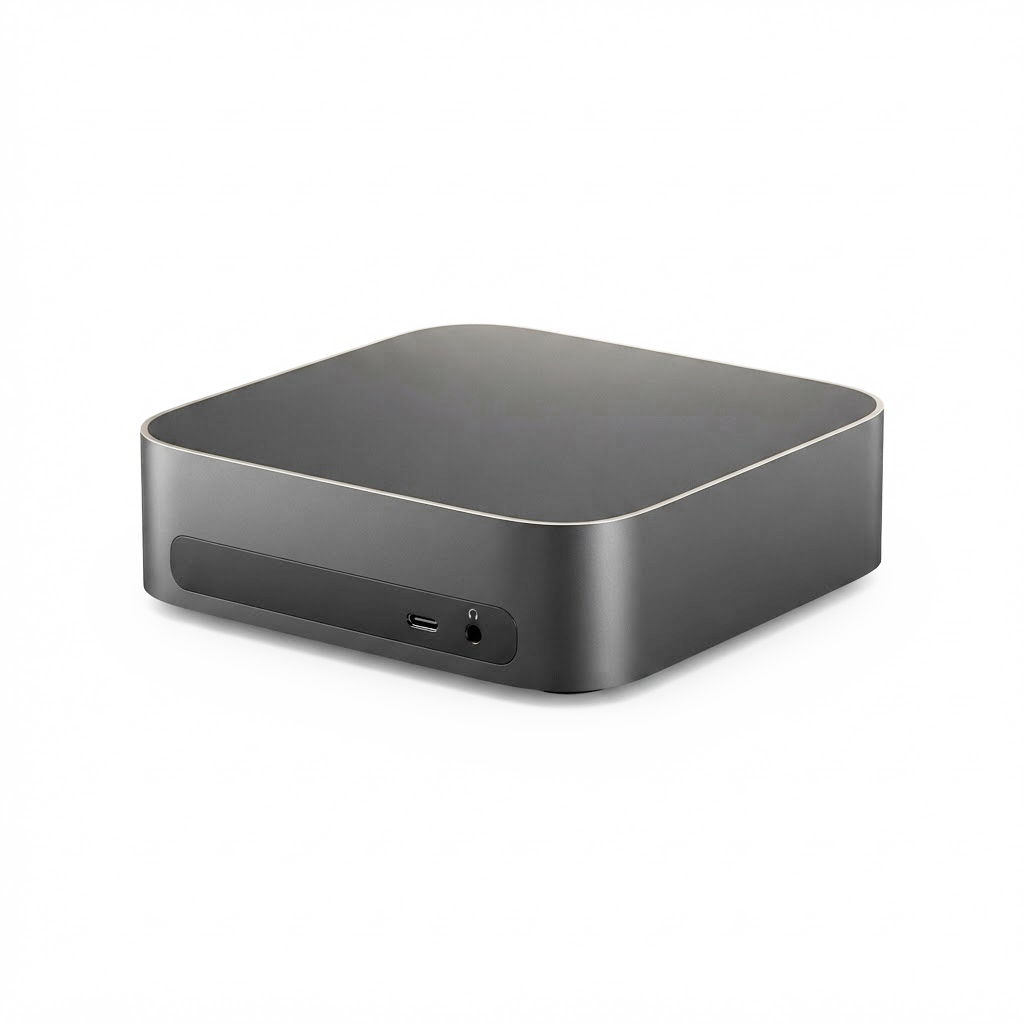 Your computer. At your office. On your desk.
The real price of ChatGPT
One pasted document. One leak.
Your employee pastes an invoice with client data into ChatGPT. Or a contract fragment. Or a client list. In a second. And suddenly that data is in a company you've never audited — without your consent, without your knowledge, and without a single trace on your side.
Data leaves the building
One click and your client list, finances, or know-how is on servers you don't have access to.
You don't know what happens to it
Storage, training on your data — that company won't show you what it does with what you pasted.
You don't know when it happened
One person, one chat, one pasted file. On your side there's no trace at all.
You'll find out when the fine arrives
Or when the client walks. Or when you read about the leak in the press. Then.
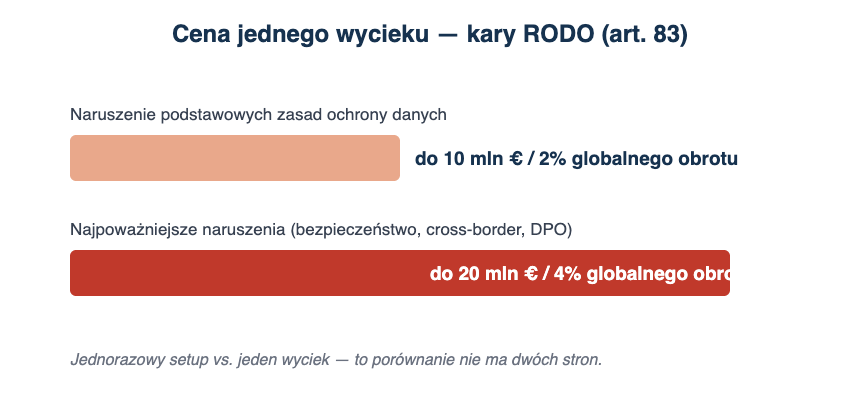
or 4% of global annual turnover — whichever is higher. That's the upper limit for the most serious violations: data security and data transfer outside the EU. Pasting documents into ChatGPT (a US company) is exactly that kind of transfer.
or 2% of turnover — for violating basic data-protection principles. Art. 83(4).
you have to report a breach to the supervisory authority — from the moment you learn about it. Art. 33.
a client whose data leaked, a contract that will never come, and know-how your competitor now has. Costs no Art. 83 will price.
What people lost using those tools.
And these aren't theories. 2023: at Samsung, one employee pasted company code and meeting notes into ChatGPT — the data landed on someone else's servers with a note that it 'may be shared with other users'. Samsung banned AI; Apple did the same a month later. Both companies had armies of security engineers. The same ChatGPT bug (2023) let foreign users read your chats and see card data.
SOURCES: TOM'S GUIDE / FAST COMPANY 07.2025 · MALWAREBYTES 01.2026 · INFOQ 01.2026 · PROMPTARMOR 01.2026 · BLEEPINGCOMPUTER 02.2026 · THE GUARDIAN 25.09.2026 · TECHCRUNCH 05.2023
The other side of the coin
'Safest' means: no AI at all. That's the most expensive option.
Many firms 'protect' themselves from leaks exactly this way: they stop using AI. Sounds logical. See what it really means for your business.
 Hours that AI does in a minute
Competitors answer in minutes
Companies with AI prepare quotes, offers, and analyses faster. They're ready before you finish your coffee. In a tender, the cheaper one doesn't always win — the one that presents a sensible answer first does.
Your team drowns in documents
Reading, summarizing, preparing — hours that AI does in a minute, your people do in a day. You pay for it in salaries, not subscriptions. And that's more expensive.
You're not cutting risk. You're cutting speed.
Giving up AI doesn't give you safety — it gives you a slower business. And slowness has a price in every tender, every response, and every contract.
The third option
You don't have to choose between AI and safety.
You can have both.
papuga.app
All the benefits of AI. Zero leaks.
We set up one thing at your office: a small computer with AI and team training. The AI works on your documents and makes running the business easier. The only way data can leave is human action. Like any ordinary document.
On the desk. Not in a server room.
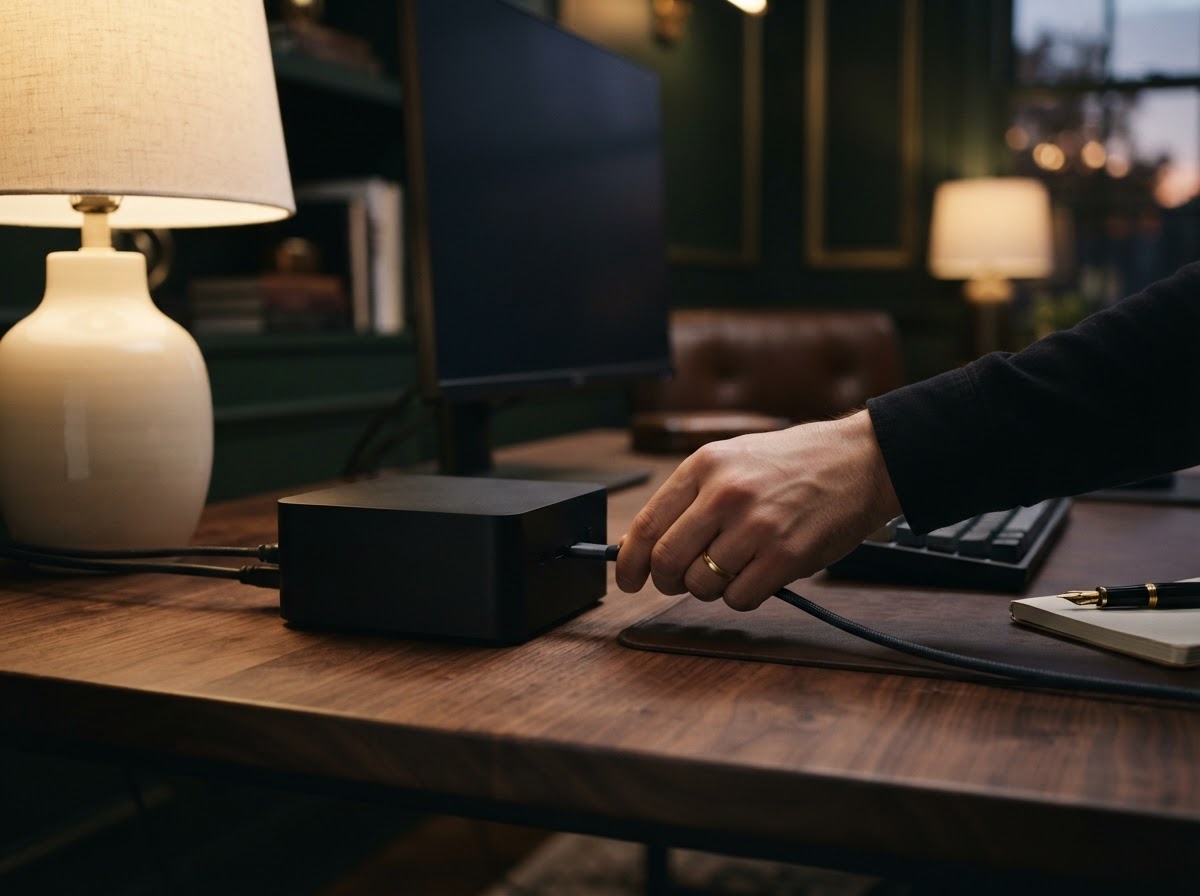
We don't build you a server room, we don't haul in racks of electronics. We set up one small computer — the size and silence of a Mac Mini — and that's the entire infrastructure. Inside: an AI that works exclusively on your documents. Pull the cable — and the whole AI stops working, because there's nothing beyond that room. That's how it should be.
What AI does for you
Questions about your documents
Contracts, clients, finances, know-how — ask anything. The answer comes from your materials, not the internet.
Summaries
Long contracts, meeting notes, correspondence — condensed in a minute. The team reads the essence, not a hundred pages.
Drafts
Emails, contracts, quotes — AI prepares version zero, the team edits it. Nobody starts writing from a blank document.
Why nothing leaks
Your computer
It's on your desk. You see it, touch it, pull its cable. It's your property.
Your AI
It works exclusively on your computer. It doesn't call anyone, it sends nothing. You can verify it with your own eyes — nobody has to take anything on faith.
Zero training on your data
Your documents don't become someone else's commodity. There's no way it could.
| ChatGPT / Claude (someone else's program) | papuga.app | |
|---|---|---|
| Where the data physically is | On someone else's servers — in a company you don't audit | At your office, on the desk — one small computer |
| Who processes the data | A foreign company. You don't sign a contract with it for your data — you just accept the ToS. | You. The AI runs on your computer, for your team |
| Does data leave the company? | Yes — that's what it's all about. Every question goes to their servers | Zero. The AI sends nothing outside your building |
| Do they train on your data? | A foreign company assures you they don't. You won't see the words for it | No. There's no way it could |
| Can you verify it | No — it's a black box | Yes — the computer is at your office. You see what and where it runs |
| Does data leave your building? | Yes — with every conversation involving data | Never. The computer is at your office |
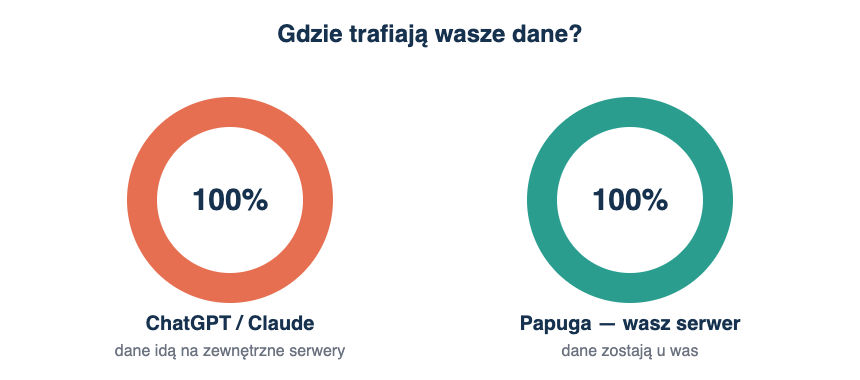
Where does your data go?
In ChatGPT and Claude — always to someone else's servers. In papuga — nowhere. The computer is at your office, the AI only works at your office, the data has no way out.
The effect is simple: the team works with AI on their own documents. Exactly where those documents have always been.
We say it straight
We don't sell the fastest AI. We sell control.
We say it straight: the AI we set up isn't the most intelligent in the world. It's not the fastest, and it doesn't win races.
It doesn't need to. For work with documents — searching, summarizing, preparing texts — it's more than enough.
For public texts, you keep the big AI. Papuga is for what you mustn't show anyone.
Who it's for
For accounting firms and companies that live on other people's data.
Your clients entrust you with data: people, companies, contracts. You hold it — and you're accountable for it. One file pasted into someone else's program and your client finds out about the leak. And you pay the fine.
That's why this landing exists: AI on your and their data that never leaves your desk. We also work with law firms, clinics, and insurers — everywhere client = data.
 Your data. Your responsibility.
If you don't handle other people's data — this landing isn't for you. We'll tell you straight on the call.
Deployment
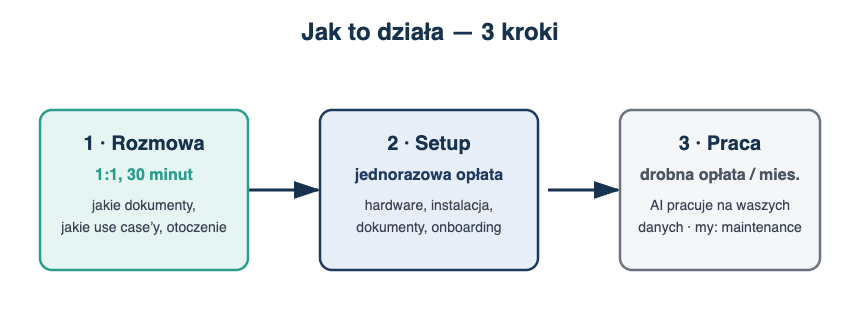
3 steps.
Call — 1:1, 30 minutes
What documents, what you want to do with them, what environment. We'll tell you straight whether it's worth it for you.
Setup — one-time fee
We set up a small computer at your office, connect the documents, train the team. The computer stays yours.
Work — small fee / month
The AI works on your data at your office. We take care of the whole thing: operation checks, updates, help when needed.
Price
Price agreed 1:1.
Every company is different: hardware, amount of documents, use case. That's why we don't show a price list — we show the structure.
Setup · one-time
Hardware + installation + setup + training
Considerable, but we build it to stay: your computer, your AI, your data. Not a subscription in someone else's program.
Care · monthly
Small fee
Operation checks, updates, help. You pay for the system working — not for access to someone else's servers.
No overselling
What we can promise today.
Everything is at your office, on the desk
One small computer. Not a server room, not 'somewhere', not 'at someone's'.
The AI sends nothing outside
Not to OpenAI, not to Claude, not to anyone. Period.
Zero training on your data
Your documents don't become someone else's commodity.
You see what runs where
The computer is at your office. Nothing runs on someone else's side.
Questions you hear
FAQ
Last step
Book 30 minutes.
Two minutes. Three questions, your data — and then the calendar. On the other side: a conversation where we'll tell you straight whether it's worth it for you. No pressure, no 'last chance'.